Published on 16 August 2025
Dr. Pippie Hugues
Research Coordinator, Conflict Lab
Published on 16 August 2025
Research Coordinator, Conflict Lab
The Intersection of Faith and Politics in Cameroon: The 2025 Presidential Elections
Introduction
When reflecting on the crucial choices that politicians make and the implications these choices have, whether positive or negative, on the futures of countless individuals, it becomes clear that in the effort to execute God’s will, even in small ways, politics can serve as a vessel of grace(1). The convergence of faith and politics has historically been a topic of academic study and public discussion, shaping governance systems and interactions globally. Recent studies have progressively centered on elucidating how religion influences political procedures and governance, underscoring its effects on personal perspectives, social standards, and policy-making(2). The recent revelations by certain bishops of the Roman Catholic Church in Cameroon have sparked significant concerns among many in relations to the 2025 Presidential elections. The Constitution of Cameroon ensures the freedom to practice religion and the right to follow any faith. The constitution additionally asserts that the state is secular and that the government is obligated to safeguard religious freedom(3).
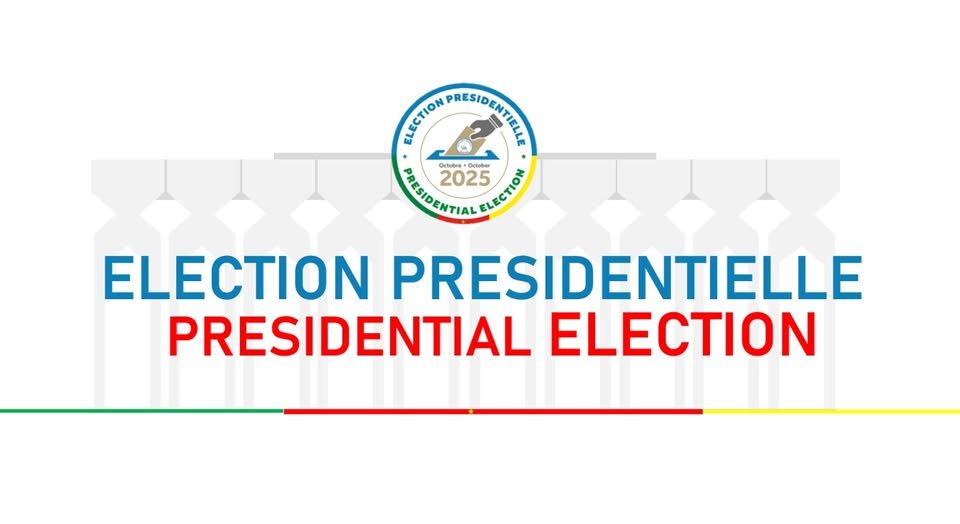
This paper intends to explore the relationship between the church and politics and reflect on future implications, especially considering that 2025 is an election year. What effects will these revelations have on the impending election, and what should Cameroonians anticipate?
The Church and Political restructuring
The effectiveness of a political system depends on the full and passionate engagement of its citizens. Taking part in elections can be seen as a gesture of trust. Selecting policies and leaders that reflect our common values of justice and peace is a way for Christians to work towards a world that resembles the one envisioned by God(4).
Church leaders encounter the challenge of involving people in the election process while preserving their stance. It is essential for those with faith to engage actively in the political system. Therefore, church leaders have the right to share their individual views on elections and particular candidates. The recent outing of some men of God, most recently, some Bishops of the Roman Catholic Church in Cameroon concerning the Current president of Cameroon taking another mandate in the 2025 presidential elections goes further to buttress the important role the church plays in the political ecosystem(5). The church can help educate its members to identify which candidates share values that are in line with their beliefs.
Bishop Barthelemy Yaouda Hourgo from the Catholic Diocese of Yagoua discussed the challenges faced by Cameroonians during an appearance on Equinox TV(6). The bishop’s fervent appeal highlighted the growing discontent among Cameroonians who have suffered years of political stalemate and strife, including a separatist struggle in the Anglophone areas and the persistent danger of Boko Haram in the Far North. In addition to the unease, Bishop Emmanuel Abbo from the Catholic Diocese of Ngaoundere voiced his disappointment over the government’s suppression of opposition(7). Archbishop Samuel Kleda, from the Metropolitan Archdiocese of Douala, was clear in his stance against another term for President Biya, describing it as “not realistic.” While speaking on Radio France Internationale (RFI), he reminded the audience about the limited span of human life and leadership: “Eventually, we depart from this world.” “We are not everlasting,” he stated(8).
Archbishop Jean Mbarga of Yaoundé adopted a contemplative stance, encouraging the believers to embrace their historical duty. “We are approaching a jubilee year and an election year,” he stated, encouraging, “I call on the faithful to take on their duties to the nation.” The collective position of the Bishops arises as they gathered in Buea for their 48th Plenary Assembly, concluding on 11 January(9). The former moderator of the PCC some times in November 2024 invited Christians of the Presbyterian Church in Cameroon to get themselves register and effectively take part in the upcoming elections(10).
The effect of the church involvement on the political ecosystem in Cameroon
The Church’s engagement in the socio-political transformation process to attain justice is an essential task that should not be overlooked. Christians should actively strive to eradicate all types of oppression and injustice wherever they occur. The Church’s involvement in restructuring should seek to enhance its impact on the socio-political environment while preserving its spiritual and evangelistic objectives. This will necessitate the Church to confront unjust, oppressive, and exploitative systems with Christian values and teachings(11).
Besides its spiritual obligations, the Church ought to commit itself to advancing justice, human rights, social advancement, and sound governance by carrying out several duties. These involve addressing marginalization, increasing awareness, motivating Christians to engage in the political process, fostering dialogue and harmony, and maintaining scriptural principles.
The Bible encourages Christians to value wisdom and discernment in their decision-making, including issues related to politics and elections. In James 1:5, the Bible encourages believers to ask for God’s wisdom, assuring them that it will be generously provided without reproach. The Church, charged with ethical teachings from the gospel, has the duty to confront and challenge corrupt systems that rob the people of their rights. Even when confronted with obstacles posed by corrupt leaders, the Church should consistently recall its responsibility to influence society positively through the teachings of Jesus Christ(12). By embodying virtues such as love, joy, and self-discipline, the Church can fight against marginalization and provide prophetic testimony to support the marginalized. As a force for freedom from injustice and inequality, the Church must remain steadfast in its mission to free the nation from selfish individuals without pursuing personal advantage(13).
Conclusion and Recommendation
The convergence of religion and politics has historically been a topic of academic research and public discussion, affecting governance frameworks and interactions globally. The historical development of church-state interactions provides important perspectives on the intricate relationship between religion and politics. The impact of faith on political ideologies and policies is a subject of significant academic interest, with this study illuminating the various ways religion influences political ideas and behaviors. Spiritual leaders frequently hold significant power in the political sphere, influencing governance structures and policy decisions. The complex relationship between religion and politics significantly affects governance, policy formulation, and even electoral results. Faith-based beliefs significantly influence political ideologies and policies, directing personal conduct and communal standards. Religious figures, as political players, exert considerable power, championing policies and rallying backing grounded in their ethical legitimacy. The effective incorporation of religious viewpoints into politics demonstrate how religion can play a role in promoting political stability and affecting voter choices. The Bishops calls for change in the political ecosystem in Cameroon have resonated with many Cameroonians who are weary of unkept promises and prolonged suffering. One of the expected outcome is for the opposition to build a solidified force and be the messiah that the population is glamouring for. Again, many pundits asked the question of what is the future for Cameroon post-Biya era? Is Cameroon ready politically to strive after the current regime? Is a succession plan in place to carry Cameroon into the promised land? These and more are some of the questions in the minds of most Cameroonians as we draw close to October 2025. Furthermore, it is expected that the citizens have their own role to play as electorate. The elections management body (ELECAM) has reopened registration into the electoral register after it was closed in December 2024, it is now time for every Cameroonian aged 20 years and above who has not yet register to get enlisted. To effect change, you must be part of the process.